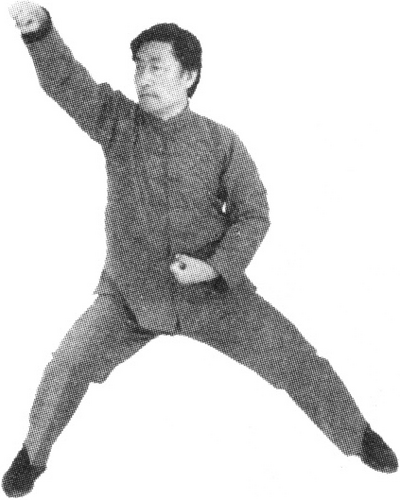
Instruction 2 (Figure 9-219): Shift your center of gravity quickly to the right, while simultaneously retracting your left shoulder and raising your right fist to the upper right, with the fist pointing downward.
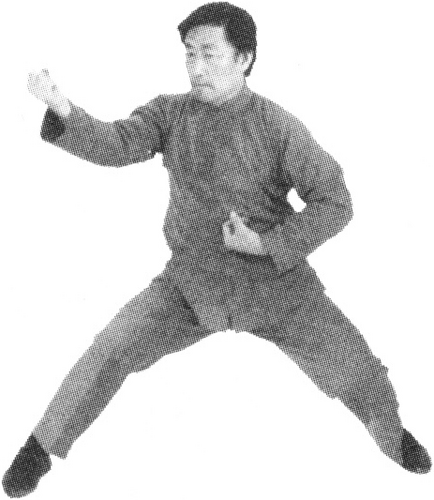
Instruction 3 (Figures 9-220, 221): Slightly turn your body to the right, shifting your center of gravity to the left, while simultaneously changing your left fist into a palm and pushing forward with force, with the palm pointing downward. Your right shoulder should push backward.
 |
 |
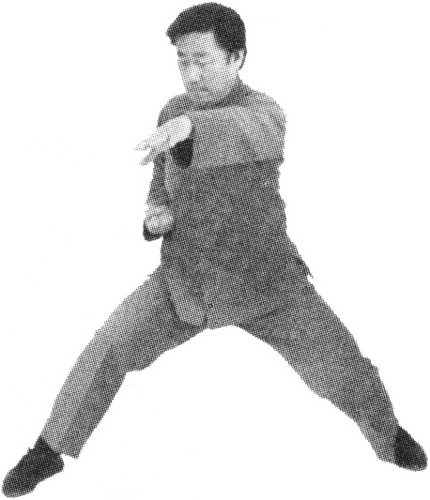 |
Fig 9-219 |
Fig 9-220 |
Fig 9-221 |
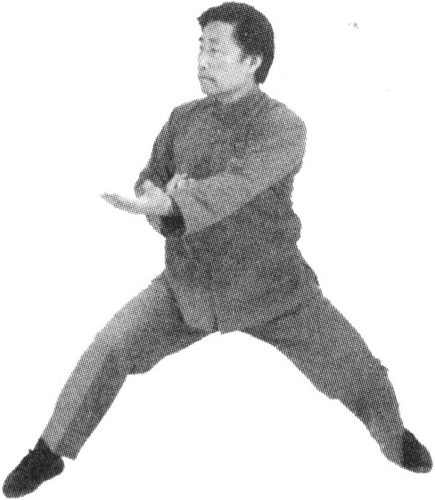
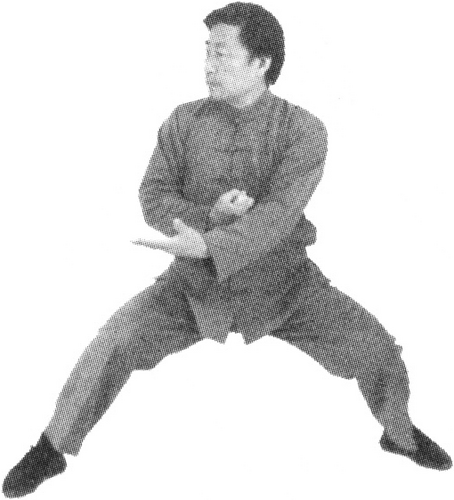
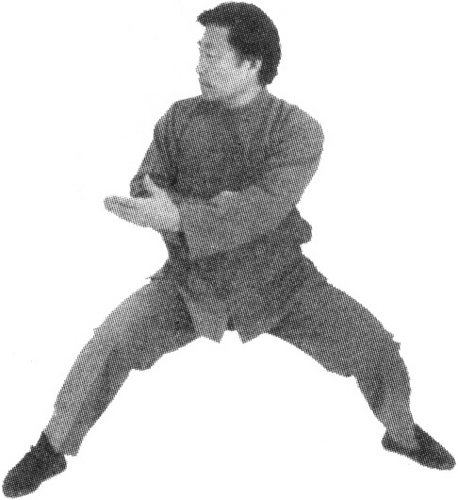
Instruction 4 (Figures 9-222, 223, 224): Turn your body to the right, shift your center of gravity to the left, and rotate your left hand inward, bringing the palm upward and combining it with the right fist in front of your chest.
Instruction 5 (Figure 9-225): Slightly turn your body to the left, quickly shift your center of gravity to the right leg, while simultaneously retracting your left shoulder and rotating your right fist outward to push forward with force.
To make all joints of your body feel like a single line, you must achieve this through the spiral movement of the "twisting thread." The thread should originate from your waist, extending through your arms, and be supported by your legs. If your legs lack this thread, you cannot achieve the state of "one body, one mind." Pay attention to this point.
This posture is called "Water Pushing" because it involves a type of force, as if "lifting an object and then pushing it." This means that at the end of the downward half-circle, there is an upward force, hence also known as "Water Pushing" force.
 |
 |
 |
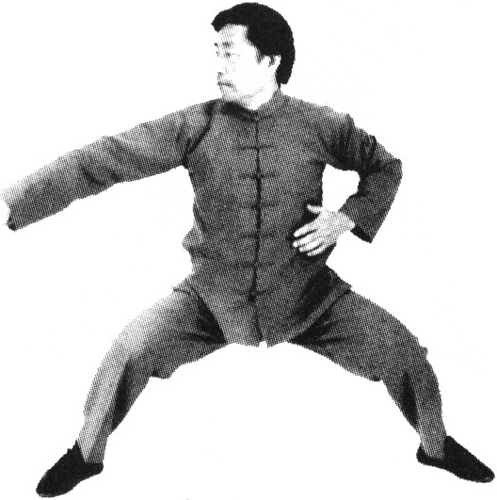 |
Fig 9-222 |
Fig 9-223 |
Fig 9-224 |
Fig 9-225 |
295