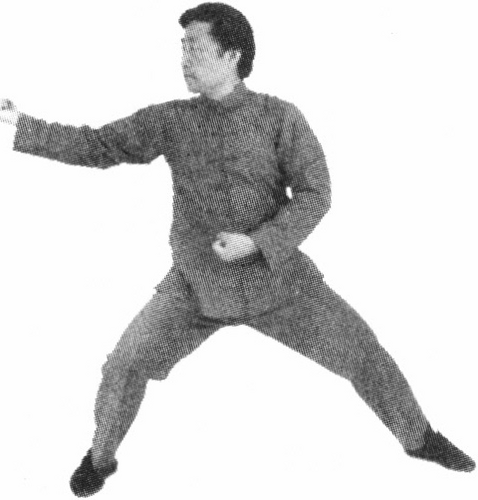
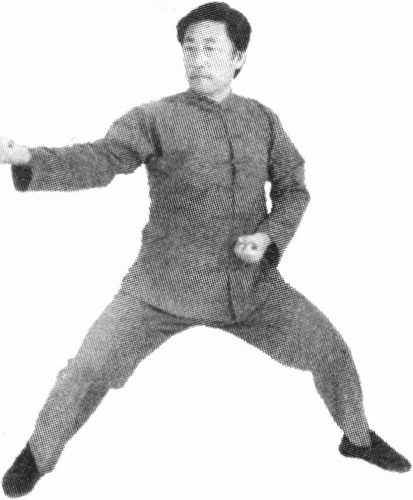
Instruction 3 (Figures 9-211, 9-212, 9-213): Body turns left, weight shifts to the left leg, while the right fist rotates inward and draws an arc to the left side of the body. The left fist rotates inward and draws an arc to the left.
 |
 |
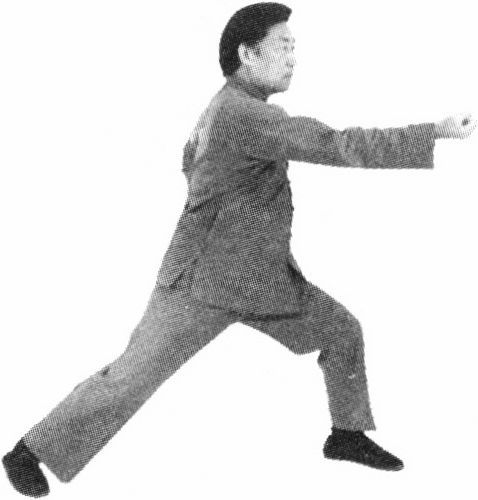 |
Fig 9-211 |
Fig 9-212 |
Fig 9-213 |
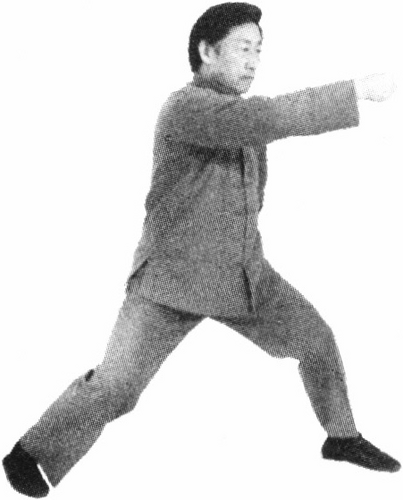
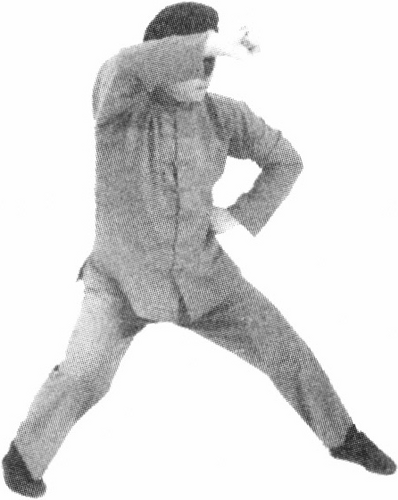
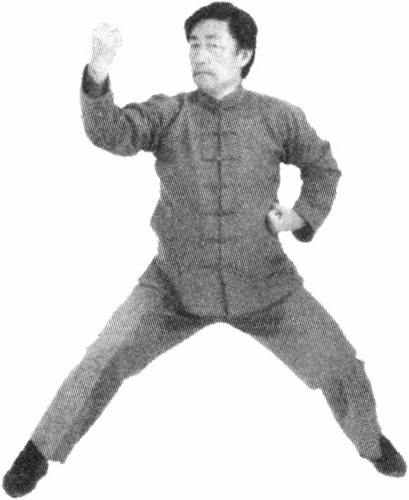
Instruction 4 (Figures 9-214, 9-215, 9-216): Body turns right, weight shifts to the right leg, while the left fist crosses the waist, fist facing back, left shoulder is inward, and the right fist follows the body's turn to the right temple, fist facing outward.
 |
 |
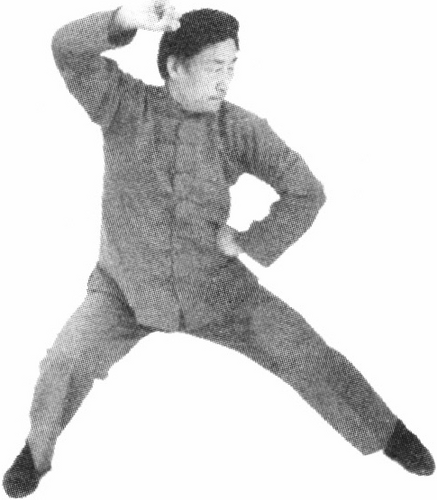 |
Fig 9-214 |
Fig 9-215 |
Fig 9-216 |
Note:
Both hands must be firmly connected to achieve opening and closing
harmony; as long as the waist is used as the axis, the right back
can naturally turn, thus avoiding any disadvantage.
When using the right arm in front of the head, the arm must be rotated to the top of the head using a small counter-clockwise twist; the key to this posture is to have the left fist tightly pressed against the waist, making the right back more tightly contracted to demonstrate the strength of the back.
 |
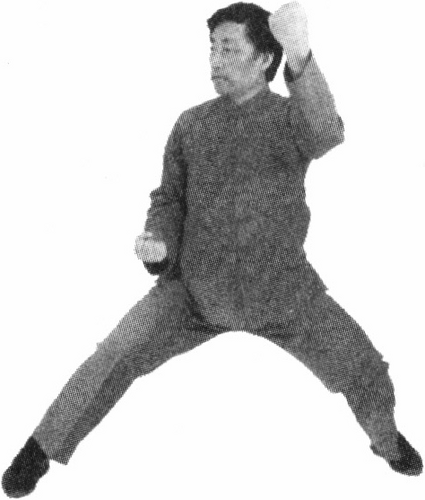 |
Fig 9-217 |
Fig 9-218 |
294