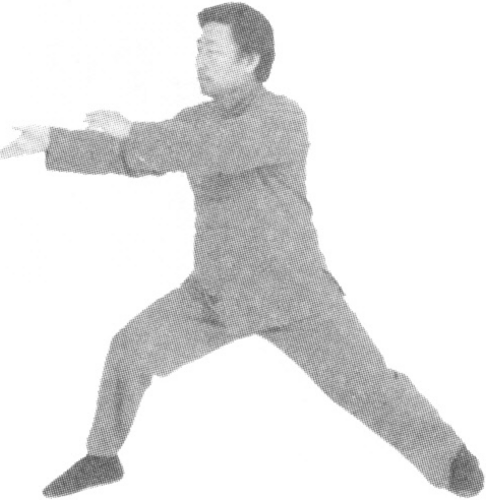
Instruction 4 (Figures 9-585, 586): Body turns left, center of gravity shifts left, both hands exert force to the left.
 |
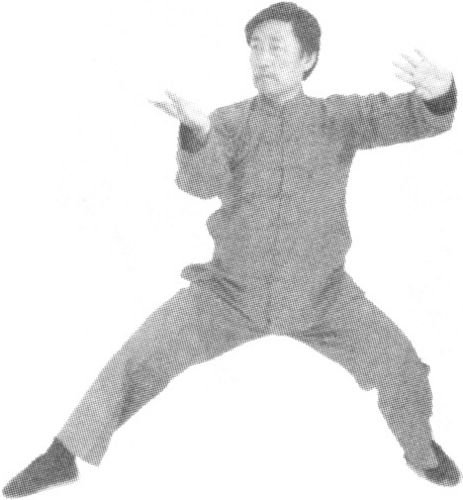 |
Fig 9-585 |
Fig 9-586 |
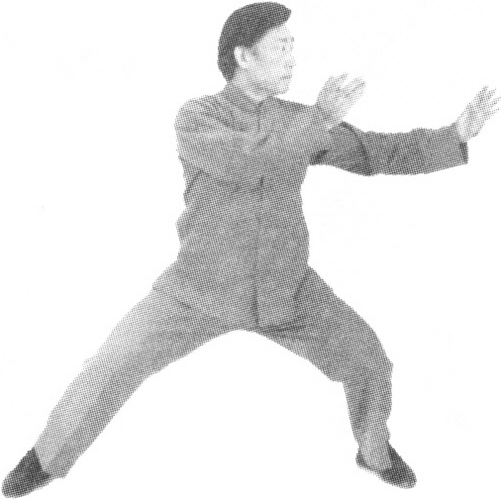
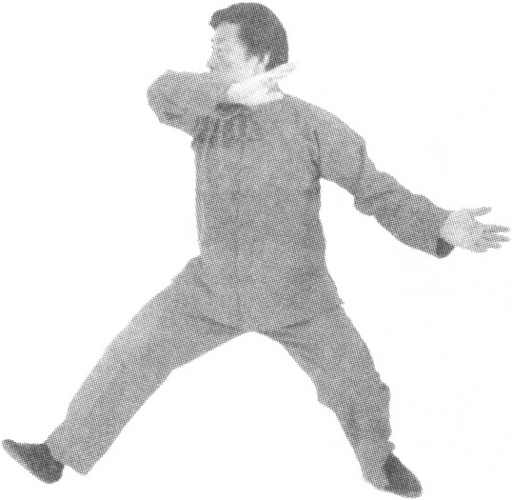
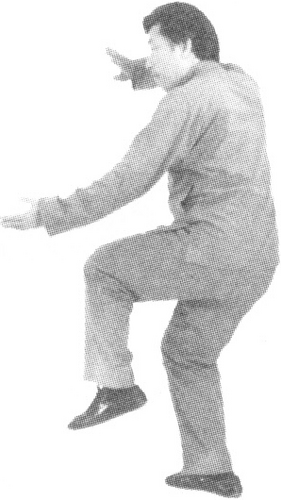
Instruction 5 (Figures 9-587, 588): Body turns right, right foot points outward, simultaneously left hand rotates inward, right hand rotates outward, left lower and right upper arc.
 |
 |
 |
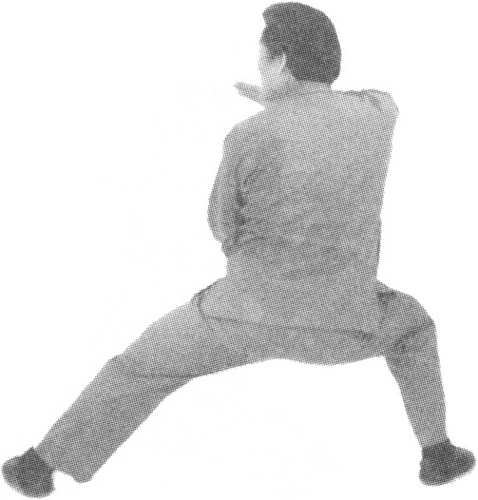 |
Fig 9-587 |
Fig 9-588 |
Fig 9-589 |
Fig 9-590 |
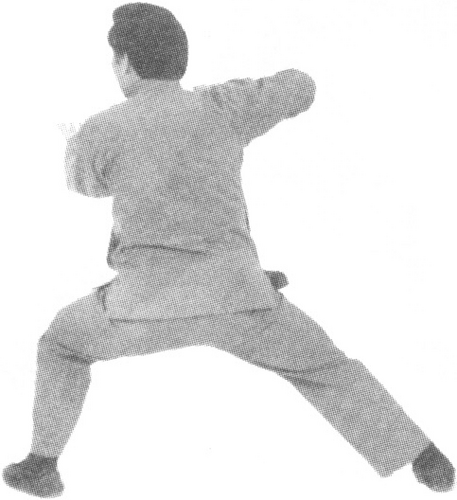
Instruction 7 (Figures 9-591, 592): Center of gravity shifts to the left leg, simultaneously both arms extend outward to the sides, at shoulder height, left palm facing up, right palm facing down.
 |
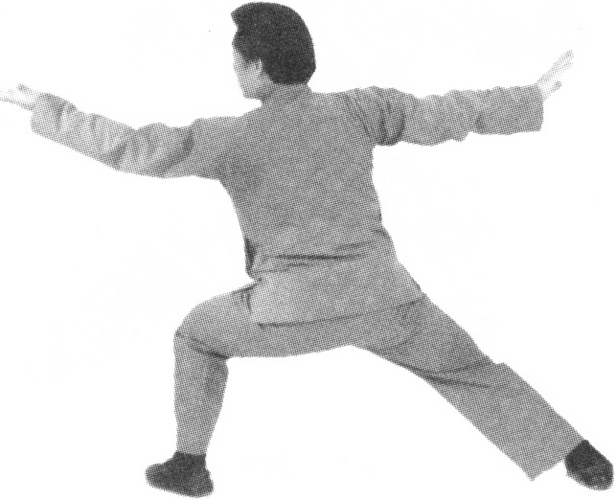 |
Fig 9-591 |
Fig 9-592 |
Key Point 1:
The "Wild Horse Splitting the Grass" is a large posture that allows qi to reach the fourth level, like a wild horse running free without constraints. The only requirement for this posture is that the skin and muscles on both sides of the spine must have the sense of being split open, like horse hair split open. Because this part of the body is "hard to separate," even slight movement will make it difficult to separate it; therefore, practice left and right repeatedly.
Key Point 2:> This posture most easily demonstrates the "Reverse Great Spiral" of Taijiquan. Under the requirements of standing upright, stability, and support from all eight directions, all movements must demonstrate the "Great Spiral" of Taijiquan: hands move up and down, in and out, inward and outward, this and that, in and out, open and close, turning and twisting. Therefore, it can serve as a classic example representing the "Great Spiral" of Taijiquan.
344