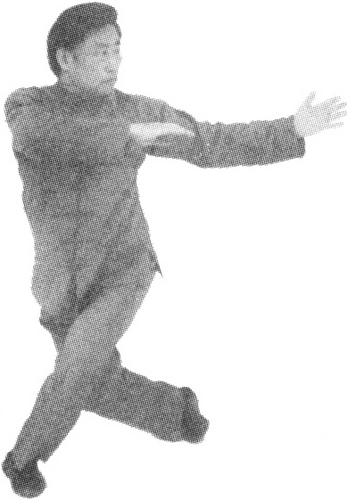
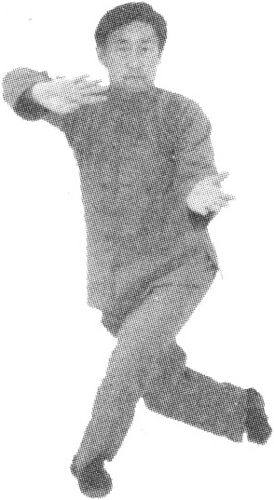
Instruction 7 (Figures 9-391, 392, 393) Actions should follow Figures 9-385, 386, 387.
 |
 |
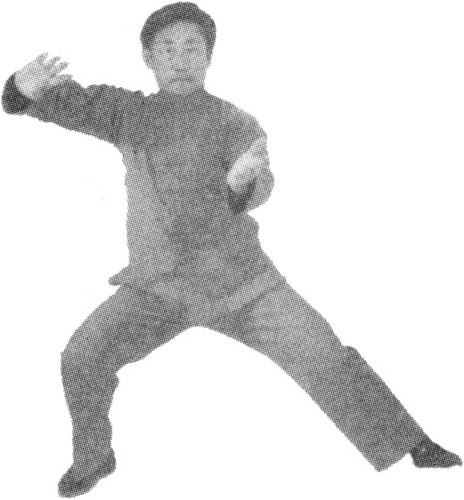 |
Fig 9-391 |
Fig 9-392 |
Fig 9-393 |
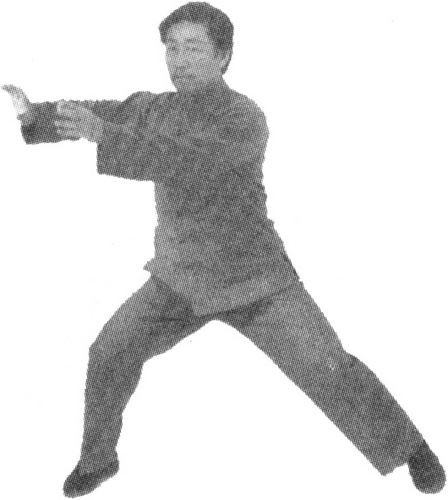
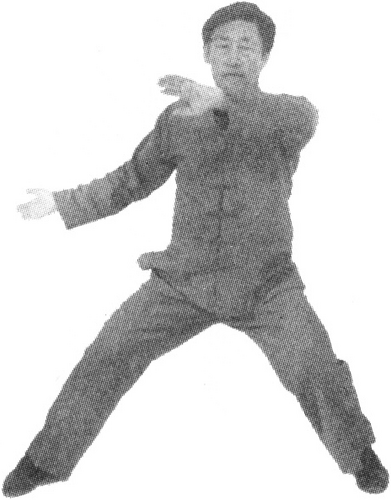
Instruction 8 (Figures 9-394, 395, 396) Actions should follow Figures 9-382, 383, 384.
 |
 |
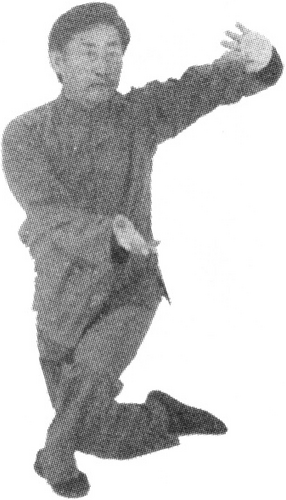 |
Fig 9-394 |
Fig 9-395 |
Fig 9-396 |
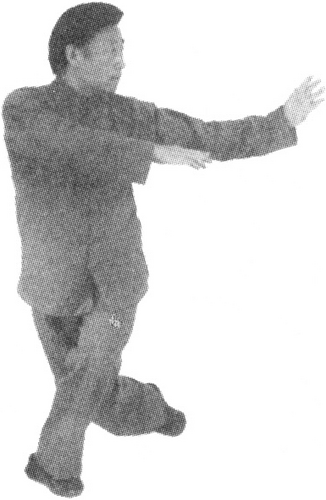
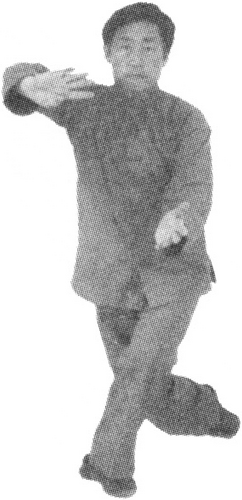
Instruction 9 (Figures 9-397, 398, 399) Movements are the same as Figures 9-385, 386, 387.
 |
 |
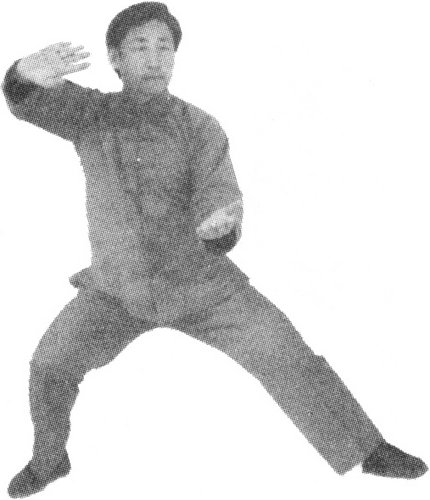 |
Fig 9-397 |
Fig 9-398 |
Fig 9-399 |
Note:
Due to this lateral movement, it is easy to demonstrate the requirement of a circular arch. The circular arch is the posture necessary to produce leg strength. The correct and standard circular arch requires avoiding high, pointed stances and low, swaying stances. Actions must be performed while maintaining a stable, non-tipping posture to achieve the correct circular arch.
Hand movement: This is the unique hand technique in Taijiquan, practiced to cultivate the large circular movement through both clockwise and counterclockwise rotations. This technique must fully demonstrate the unity of the waist and spine, becoming the axis of a spherical vehicle. The key lies in the fact that it is not a flat, left-right circular movement, but rather a movement that includes both inward and outward circular components, with this as its primary focus.
318