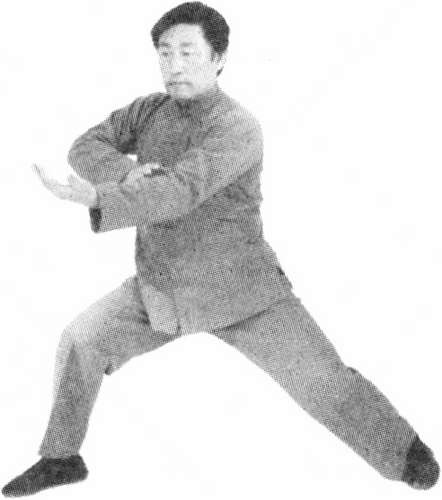
Instruction 2 (Fig. 9-548, 549): Body slightly turns left, center of gravity shifts right; simultaneously, left palm center moves inward and backward, right palm center moves outward, quickly pushing upward.
 |
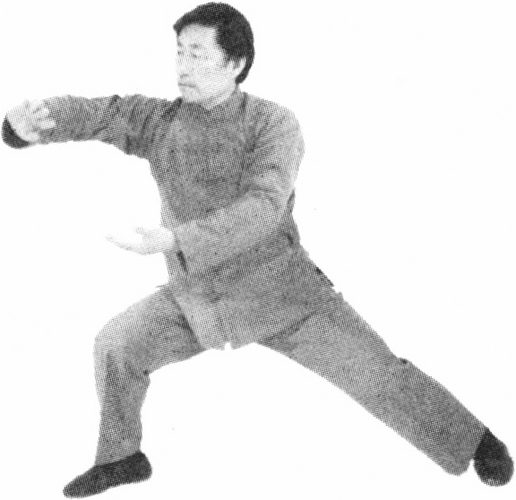 |
Fig 9-548 |
Fig 9-549 |
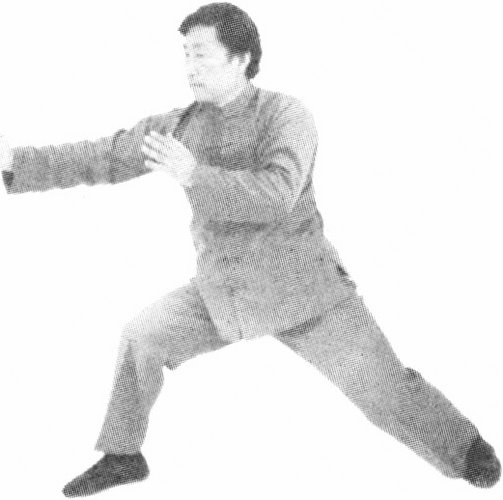
Instruction 3 (Fig. 9-550, 551): Body turns right, center of gravity shifts left; simultaneously, left palm center quickly pushes outward, right hand sinks and retracts.
 |
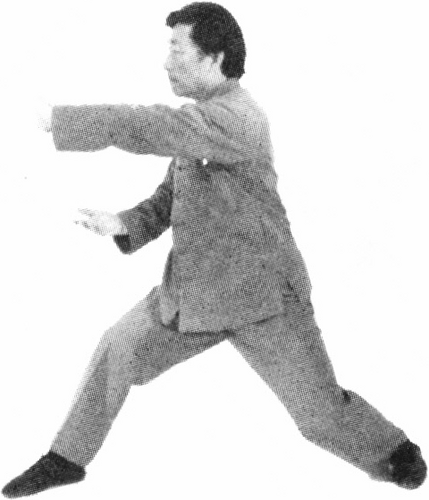 |
Fig 9-550 |
Fig 9-551 |
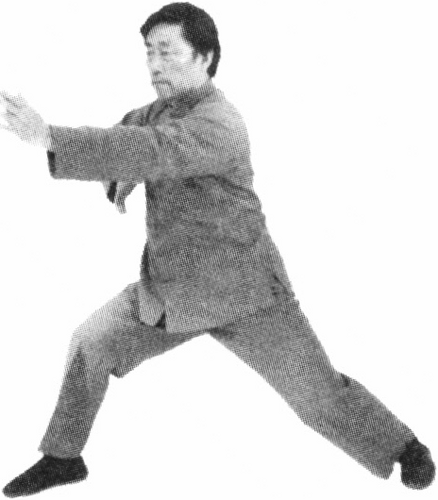
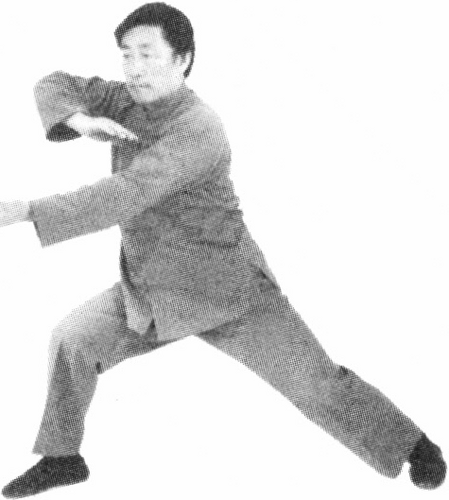
Instruction 4 (Fig. 9-552, 553, 554): Center of gravity moves to the right leg; simultaneously, left palm sinks inward and retracts, right hand rotates outward and quickly pushes forward, palm facing outward.
 |
 |
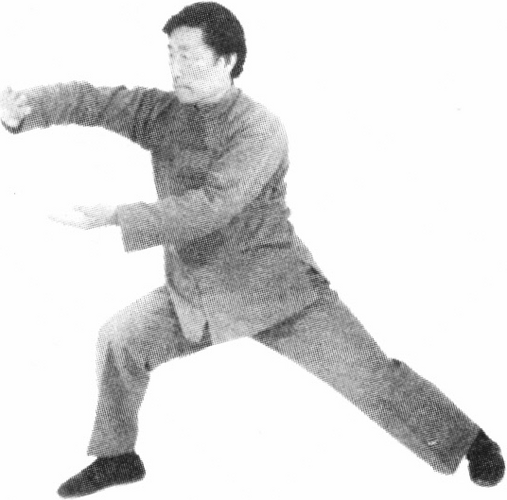 |
Fig 9-552 |
Fig 9-553 |
Fig 9-554 |
Key Points:
1. This posture performs actions while remaining stationary, without large opening or closing movements, but only within a small range in front of the chest to change techniques; its arm retraction is a smooth spiral, while pushing is an inverted spiral — this is the characteristic of changing hands.
2. Three-hand push: the first time uses the right hand to push out,
the second time uses the left hand to push out, and the third time
still uses the right hand to push out. This is formed under the
condition of not changing legs, forming three consecutive transitions;
during transitions, the lumbar spine changes and the leg rotates in a
spiral, making the lumbar and thigh muscles' virtual and real power
also change three times, maintaining the requirement of upper and lower
alignment; however, one leg supports the entire body for a longer
duration, with greater movement.
This posture not only improves
physical training effectiveness but also enhances the skill of
deflecting attacks (this is Chen Fa-ka Laoshi's masterpiece).
339